
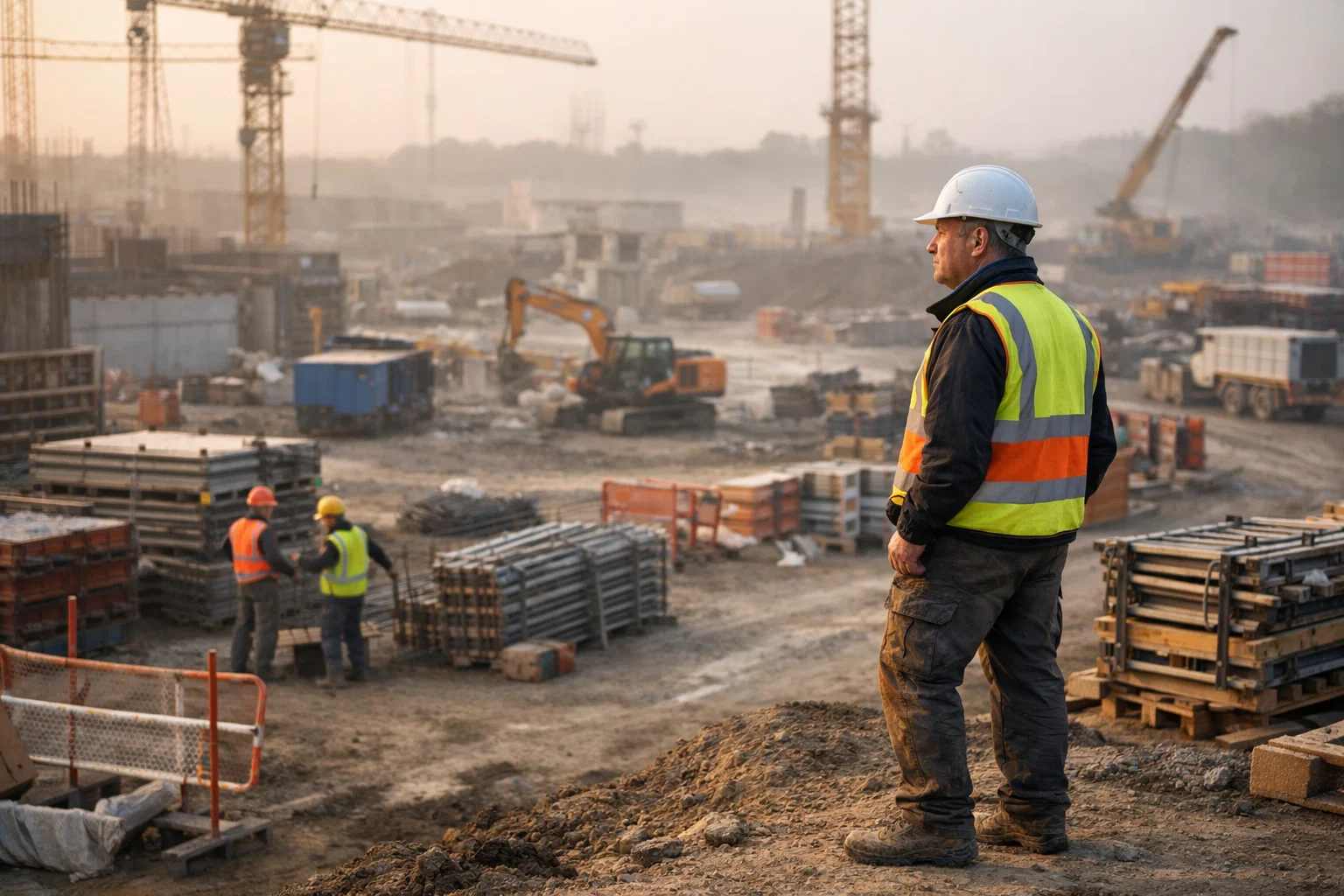
*By Alexander Christou, Foreman Manager
I usually arrive before most people. Construction sites start early and if you're managing equipment across several projects, your day starts before that.
My name is Alexander Christou. I manage a group of foremen for a large construction company. Between the sites, the warehouses, and the equipment we own or rent, knowing where everything is falls on me.
The hardest part of the job? It wasn't the construction. It was never knowing where the equipment actually was.
The 7:30 Problem
Every morning starts the same way.
One foreman calls asking if we have enough formwork panels. Minutes later, another needs a generator. Then someone wants to know where the safety barriers ended up.
Each question sounds simple. Answering them never was.
Because tracking equipment was never really a system. It was spreadsheets, phone calls, and a lot of guessing.
The Spreadsheet Illusion
For years we tracked everything with spreadsheets. One for the warehouse, one per site. Sometimes they were updated. Sometimes nobody touched them for days.
So when a foreman asked if something was available, I'd open the file and see numbers that looked reassuring. The warehouse inventory might show 40 formwork panels, 3 generators, 120 safety barriers, pallets of scaffolding. Good news, right?
Not exactly.
The spreadsheet never reflected what moved yesterday. Or what was loaded onto a truck that morning. Or what another site had already taken. It always looked organized. Reality was usually different.
The Hidden Cost
The most frustrating moments were the surprise rentals.
A site would urgently need equipment. The spreadsheet showed nothing available. So they'd rent from an outside company. Two days later, someone would say: "Alex… we actually had two generators sitting unused at Site A."
The equipment wasn't lost. Not stolen. Just invisible.
That's the real cost of poor equipment management. You might already own what you need, you just have no idea where it is.
What We Actually Needed
At some point it became obvious that the problem wasn't the foremen. Everyone was doing their job.
The problem was the system.
Spreadsheets were never built to track equipment moving between multiple sites every day. They're static. Construction isn't.
What we needed was something that could clearly show what the company owns, what's currently rented, where each piece of equipment is, and what's moving between sites. Once you're recording movements properly, visibility follows. Instead of calling five people, you check the system.
When Everything Works Together
I think about this sometimes, how many moving parts a construction company actually has. Equipment shifting between sites, foremen coordinating work, trucks delivering materials, warehouses dispatching tools.
I saw an ad recently for an expensive watch brand. It showed the inside of a mechanical movemen, all those tiny components turning together so the watch keeps perfect time.
A construction company works something like that. Sites, teams, equipment, deliveries, when everything moves in sync, things run. When one part stops working, the whole operation slows. For us, the missing piece was simply knowing where our equipment was.
Once you have that, everything else gets easier.
Final Thoughts
Construction will always be demanding. Managing equipment shouldn't also feel like detective work.
For a lot of companies, the biggest gains don't come from working harder. They come from having a clear picture of where things are.
Because when you know where your equipment is, you can focus on what actually matters.
Building.
The name Alexander Christou is fictional. The story is real, drawn from an interview with a construction foreman manager. Some identifying details have been changed.