
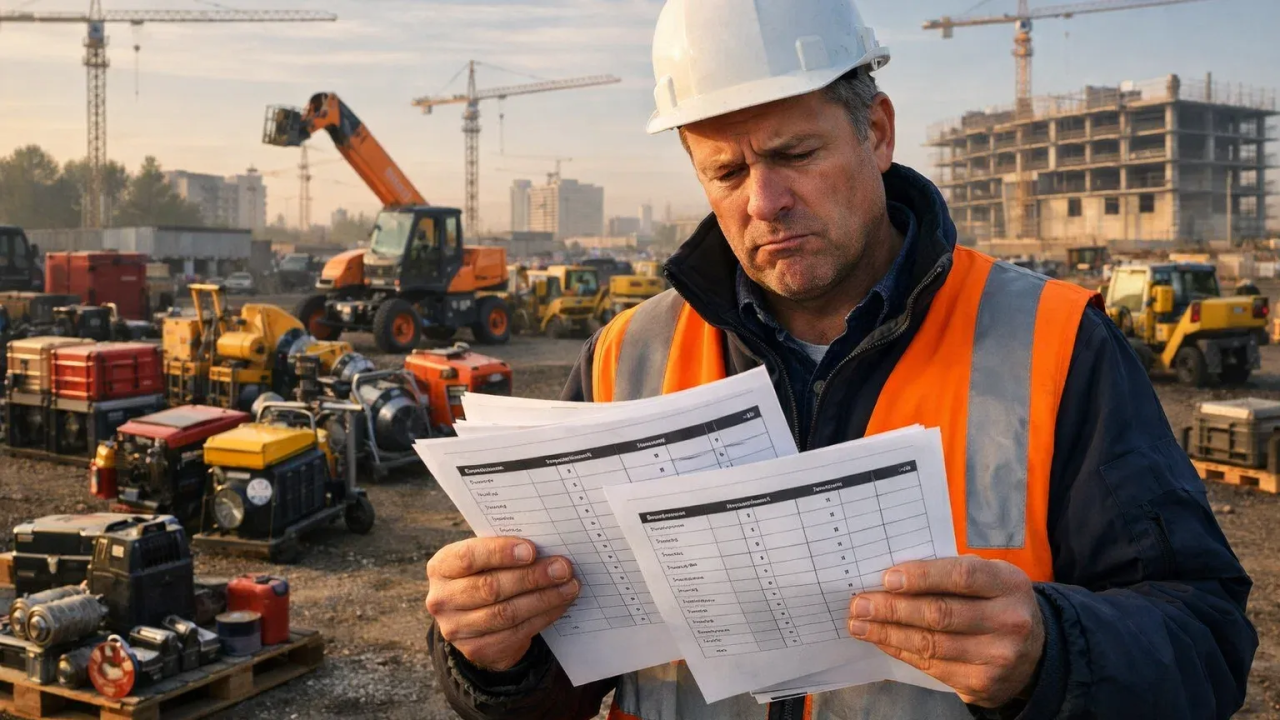
The Equipment Was Never Missing. You Just Couldn't See It.
A contractor orders fifteen pumps for a project starting Monday. The operations team checks the spreadsheet, finds nothing available, and raises a purchase order.
Two months later, the original pumps turn up at a site that finished weeks ago.
Nothing was stolen. Nothing disappeared. The equipment never left the company. Nobody just knew it was there.
This happens more often than most contractors expect. As companies grow and projects multiply, fleets become harder to track and operational visibility quietly fades.
The Fleet Exists. The Visibility Doesn't.
Construction companies invest heavily in their equipment. Telehandlers, access platforms, generators, pumps, welfare units, power tools, formwork, temporary site infrastructure -- these accumulate over years of operations. In many firms, the fleet is worth hundreds of thousands, sometimes millions, of pounds.
What companies track carefully is what they buy. What they struggle to track is where that equipment actually is on any given day.
The gap between ownership and visibility is where the losses begin.
What "Missing Equipment" Usually Means
When something can't be located quickly, the instinct is to buy more or hire more. From a project manager's perspective, that's rational. Schedules don't leave time for long internal searches.
But most of the time, the equipment hasn't actually disappeared. It's usually somewhere inside the company's own operations:
- sitting on a completed job site
- returned to a different depot than expected
- under a subcontractor's control with no formal record
- logged incorrectly as available
- never returned to inventory after the previous project
The equipment exists. The company just can't see it.
The Cost of Deciding Without Good Information
The financial damage rarely comes from one dramatic mistake. It builds slowly through small decisions made under pressure.
Site managers need equipment immediately. Warehouse teams are working from outdated records. Procurement orders replacements to avoid delays. Over time the results stack up: duplicate purchases, unnecessary hire contracts, idle assets sitting unused across different sites, a growing fleet with falling utilisation.
Each individual decision makes sense at the time. Together they create a quiet, persistent financial leak.
Why Spreadsheets Stop Working as Fleets Grow
Most contractors start with spreadsheets. For smaller fleets, that works well enough.
The trouble appears once equipment is moving constantly between warehouses, job sites, subcontractors, and maintenance areas. As transfers increase, manual tracking becomes unreliable. Updates get missed. Records go stale. Equipment that moved yesterday still shows up in last week's location.
The spreadsheet ends up reflecting where equipment was, not where it is.
That's not a discipline problem. It's a limitation of the tool.
The Shift That Fixes It
Companies that solve this usually make one change: instead of tracking only what they own, they start tracking how equipment moves.
Every transfer gets logged:
- warehouse to site
- site to site
- returns from completed projects
- temporary allocations between teams
Once movements are recorded consistently, the picture becomes clear. Managers know what the company owns, where each asset is, which project is responsible for it, and when it'll be available again. Procurement decisions get made on actual availability rather than guesswork.
The Quiet Costs Nobody Talks About
Stolen machinery and insurance claims are visible. They trigger investigations.
The more expensive losses are usually the invisible ones. Equipment purchased twice. Hire costs for assets already owned. Idle machinery sitting on finished sites. Procurement decisions made without reliable information.
These accumulate slowly, often unnoticed, and nobody raises a flag because there's no single moment that looks like a mistake.
The Most Expensive Equipment in Your Fleet
Every contractor already owns equipment they can't easily locate. It's not missing. It's just invisible inside the complexity of daily operations.
The most expensive equipment in a construction fleet is often the equipment a company already owns but can't find when it's needed.
Improving visibility isn't just about inventory control. It's about giving your operations teams the information they need to make better decisions under pressure.
About ScaffMS
ScaffMS is a construction equipment management system that tracks assets, movements, and balances across warehouses and job sites. It helps construction companies keep visibility of their equipment as it moves through daily operations.
Learn more at scaffms.it.com.